

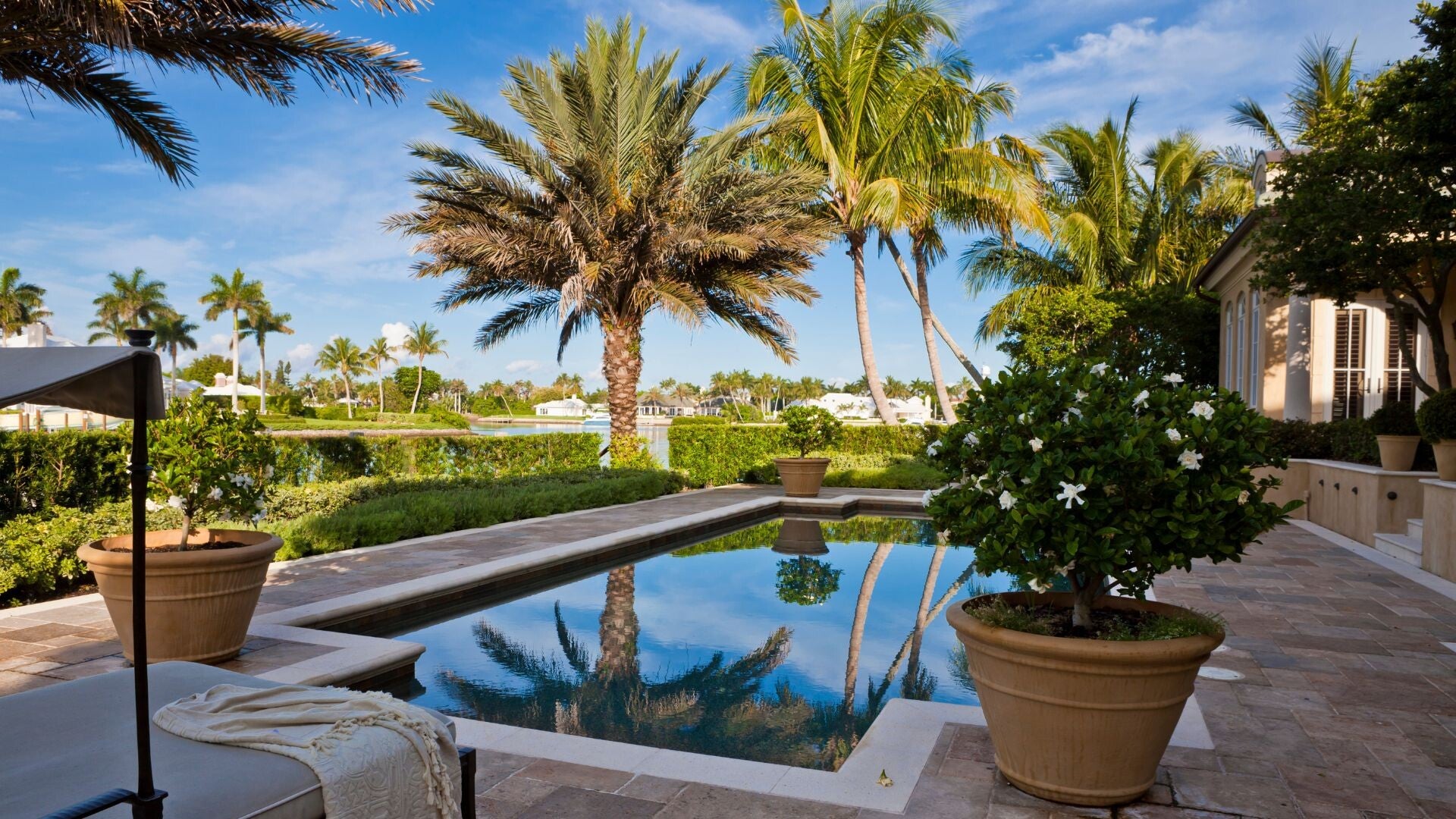
Pool Deck Sealing in Brevard County
Even color, stable joint sand, and a finish built for chlorine, salt, and Florida sun. Atlantic Exteriors seals paver pool decks across Brevard County.
15+ years sealing pavers in Florida conditions.
Why Pool Decks Wear Down Faster Than Other Pavers
A pool deck takes more abuse than any other paver surface on the property, and it needs a sealing approach built for those conditions. Chlorine residue from shock treatments. Salt from chlorinators. Joint sand washing toward the pool every time a swimmer climbs out.
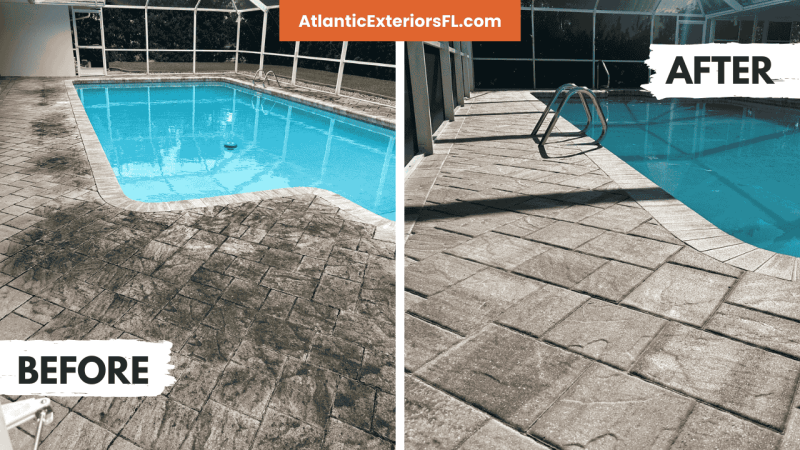
Sealed for pool conditions, a deck looks different a year in. Color stays even where the lounge chairs sit and where the kids splash out. Joint sand stays locked between pavers instead of pooling at the skimmer. The surface holds up to chlorine, salt, and daily pool traffic without fading or hazing.
The work is straightforward when it's done in the right order: replace the failed joint sand, prep the surface properly, apply a sealer formulated for pool chemistry. Done once. Maintained on a sensible cycle.

How Atlantic Exteriors Seals Pool Decks
Every pool deck sealing job starts with Derek, the owner of Atlantic Exteriors. He's been sealing pavers in Brevard County for over 15+ years and inspects every deck in person before quoting the work. If a deck isn't ready to seal, he'll say so and explain what needs to happen first.

Surface Preparation
Pool deck pavers carry residue that surface cleaning leaves behind. Chlorine, calcium scale, sunscreen, body oils, fertilizer overspray drifting from the lawn next door. Atlantic Exteriors uses a chemical cleaning step that breaks those residues down before the deck is rinsed and dried. Clean substrate, ready for sealer.

Joint Sand Replacement
Joint sand on a pool deck moves. Swimmers track it, rain pushes it, the pool skimmer eventually pulls it out of suspension. Replacing the failed sand and re-stabilizing the joints is part of every pool deck sealing project Atlantic Exteriors handles. The sealer then locks the new sand in place so the joints stay where they belong.

Sealer Selection
Atlantic Exteriors selects sealer products formulated for pool environments: chemical-tolerant against chlorine and salt systems, UV-stable for Florida sun, and color-true so the finish doesn't haze under months of pool chemistry. The exact product Derek uses depends on the deck (paver type, age, prior sealer history) and gets chosen during the inspection.
Atlantic Exteriors is a Brevard County paver sealing specialist that handles pool deck sealing through chemical residue removal, joint sand replacement, and sealer products selected for pool-environment conditions.
Pool Deck Sealing Quick Facts
Timeline: 1 to 2 days, weather dependent
Investment: $1.15 to $1.75 per square foot
Service Area: Brevard County and surrounding coastal communities
Best For: Paver pool decks with fading, chemical etching, joint sand washout, or failed prior sealer
Included: Chemical residue removal, surface cleaning, joint sand replacement, sealer selection for pool conditions, post-job inspection, 6-month follow-up
What You Can Expect From a Pool Deck Project
Most pool deck sealing jobs in Brevard County take one to two days on site. Day one handles inspection, chemical cleaning, joint sand replacement, and surface drying. Day two is sealer application and cure. A pool deck is ready for full use again about 24 to 48 hours after the final coat, depending on humidity.
The deck looks like it did the first day it was installed. Color even from corner to corner. Joint sand sitting tight between pavers. Surface ready for kids out of the pool, lounge chairs in their usual spot, summer parties on the lanai. Derek follows up six months in to confirm the sealer is performing under actual pool use.
Frequently asked questions
Ready to Protect Your Pool Deck?
To get a quote, send the rough square footage of the pool deck and a description of the current condition. Derek will come out, inspect the deck in person, and give you an honest assessment of what it needs. The same person who quotes the job does the work and follows up six months later to check how the sealer is performing.